

Introduction
Running ads for a Shopify store without using pixel data effectively is one of the fastest ways to waste ad budget. You may see clicks and traffic, but without accurate tracking, it’s impossible to know which campaigns actually drive sales.
Pixel data helps Shopify merchants understand their potential customer behaviour, optimize ad delivery, and scale profitable campaigns with confidence. In this guide, you’ll learn how Shopify store owners can optimize ad campaigns using pixel data, from setup to audience targeting and performance scaling.
1. Ensure Your Shopify Pixel Tracking Is Accurate and Complete
Everything starts with clean data. If your Shopify pixel tracking is incomplete or broken, your ad platforms will optimize based on false signals.
To properly optimize ad campaigns using pixel data, Shopify store owners should:
- Track key ecommerce events: Page View, View Content, Add to Cart, Initiate Checkout, and Purchase
- Ensure tracking works across all Shopify checkout flows, including discounts, upsells, and COD orders if applicable
- Use server-side tracking (Conversion API) to reduce data loss caused by ad blockers and browser privacy updates
Due to increasing browser privacy updates, platforms like Meta now recommend combining browser and server-side tracking to improve data accuracy, as outlined in their official documentation.
Why this matters for Shopify stores:
- Ad platforms rely on pixel data to learn which shoppers are most likely to buy.
- Missing purchase events can lead to underreported ROAS and poor optimization.
- Clean tracking improves attribution accuracy and campaign stability
If your pixel isn’t capturing every meaningful action, your ads are optimizing in the dark.
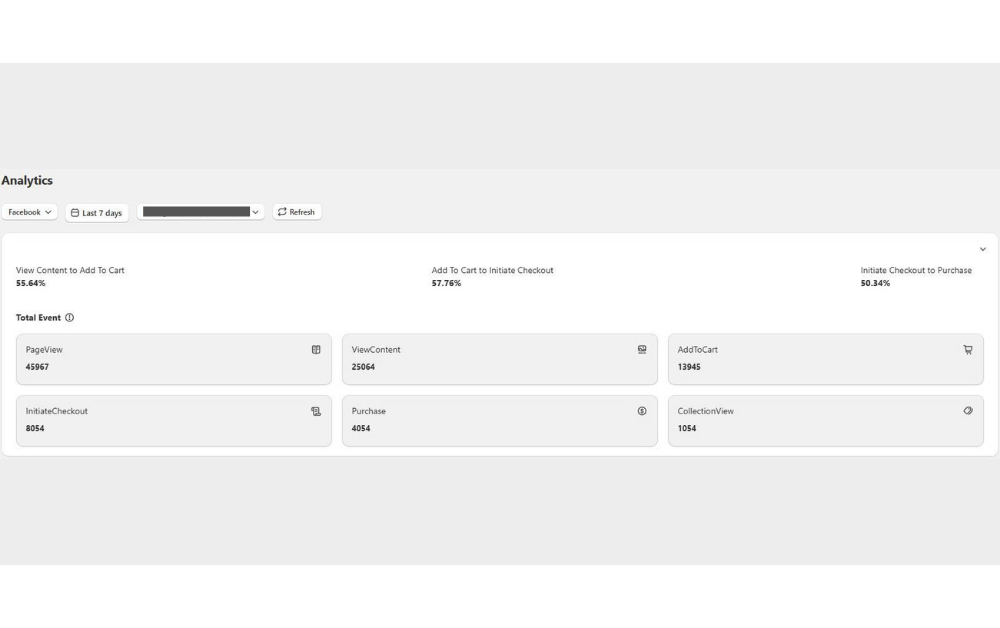
2. Use Pixel Data to Build High-Intent Audiences
Once your pixel is tracking correctly, it becomes one of the most valuable assets for your Shopify store.
Pixel data allows you to create:
- Retargeting audiences from product viewers, cart abandoners, and checkout drop-offs
- Lookalike audiences based on past purchasers or high-value customers
- Exclusion audiences to avoid spending budget on customers who already bought
Optimization tip for Shopify merchants:
Instead of optimizing campaigns for clicks or traffic, optimize for Purchase events once you have enough conversion data. This tells ad platforms to prioritize shoppers who are most likely to complete checkout, not just browse. The result is higher-quality traffic and better return on ad spend.
3. Optimize Shopify Ad Performance Using Pixel Insights
Pixel data doesn’t just show conversions. It reveals patterns that help Shopify store owners make smarter decisions.
You can use pixel insights to:
- Identify which ads lead to completed purchases, not just Add to Carts
- Spot drop-offs in the Shopify funnel, such as checkout abandonment
- Adjust bidding strategies based on real revenue data
Practical optimization actions:
- Pause ads that generate traffic but no purchase events
- Increase budget on campaigns with consistent purchase signals
- Test new creatives using conversion-based optimization instead of CTR
As ad platforms receive stronger Shopify pixel signals, their algorithms improve. Over time, this leads to lower acquisition costs, more stable scaling, and predictable growth.
Conclusion: Pixel Data Is the Growth Engine Behind Profitable Shopify Ads
For Shopify store owners, pixel data is not optional. It’s the foundation of profitable advertising.
When your tracking is accurate and your campaigns are optimized using real purchase data, ad platforms can do what they’re designed to do: find buyers, not just visitors.
If your Shopify ads feel inconsistent or difficult to scale, don’t rush to increase budgets or change creatives. Start by improving how your pixel tracks and feeds data into your campaigns.
Because better data doesn’t just improve reporting. It drives better decisions, stronger performance, and sustainable growth 🚀