Shopify BFCM Pixel Checklist: Test CAPI & Purchase Events
A practical Shopify BFCM checklist to review pixel connections, CAPI, consent, Purchase tests and measurement…

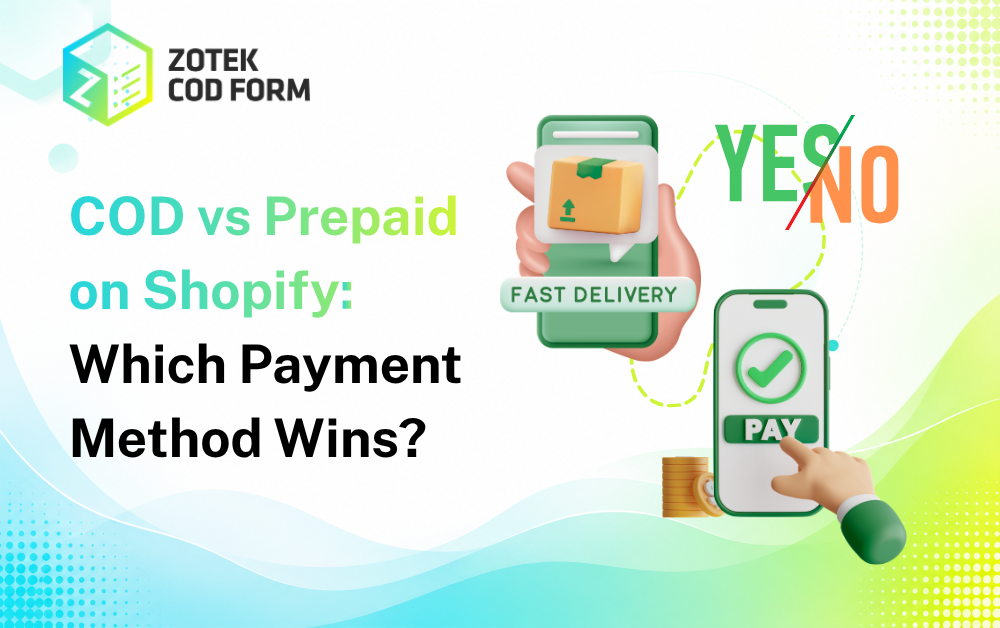
Most merchants treat this as an either-or decision, and that’s usually where the mistake starts. The real question isn’t whether cash on delivery or prepaid is the “better” payment method. It’s which one matches the market you’re selling into, the product you’re selling, and the customer who’s buying it. Get that match wrong, and you’ll see it show up as abandoned carts on one end or a return-to-sender pile on the other.
This isn’t a debate with a universal winner. It’s a fit problem, and most of the friction merchants run into comes from applying one payment strategy across markets that don’t behave the same way.
The common framing goes something like this: prepaid is “safer” because you get paid upfront, and COD is “riskier” because you might not get paid at all. That’s true in isolation, but it skips the part that actually matters — whether your customer will complete a purchase at all if COD isn’t on the table.
In markets where trust in online payment is still developing, removing COD doesn’t push customers toward prepaid. It pushes them off your checkout page entirely. The risk merchants are trying to avoid with prepaid-only strategies gets replaced by a different risk: lost sales that never had a chance to convert. Cash on delivery isn’t a workaround for weak trust — for a large share of shoppers, it’s the only checkout experience they’re willing to use.
The mistake isn’t picking COD or prepaid. It’s assuming one strategy has to work everywhere your store sells.
Cash on delivery tends to dominate in markets where three conditions overlap: limited card penetration, low trust in online sellers, and a delivery infrastructure that already supports cash handling at the doorstep.
Vietnam, Indonesia, and the Philippines are the clearest examples. Across these markets, cash on delivery has consistently made up a majority share of e-commerce transactions in recent years, and the pattern holds for similar reasons in Egypt and other parts of the Middle East. Shoppers in these regions often don’t have a card linked to an online account, and even when they do, first-time purchases from an unfamiliar store carry a level of hesitation that prepaid checkout doesn’t resolve. Paying only after the product arrives removes that hesitation.
If most of your customer base falls into this profile, COD isn’t a nice-to-have. Turning it off, or burying it behind a clunky checkout flow, is one of the more common ways merchants quietly lose sales they never see reported as “abandoned checkout”.
Prepaid makes more sense in categories where COD doesn’t map cleanly onto the transaction. Digital products have nothing to hand over at the door, so cash on delivery isn’t structurally possible. Subscriptions depend on a stored, recurring payment method, which COD can’t support. B2B orders usually involve invoicing terms, purchase orders, or wire transfers that fall outside either COD or standard prepaid checkout anyway.
Prepaid also tends to perform better with repeat customers and in markets with higher card and digital wallet penetration, where the trust question that COD solves for isn’t really in play anymore. A returning customer who’s already received one order from you has less reason to insist on paying at the door the second time.
For most stores selling physical products into mixed or trust-gap markets, the answer isn’t COD or prepaid. It’s both, offered without either one feeling like an afterthought.
A few things make the hybrid approach work in practice:
The goal isn’t picking a side. It’s making sure neither payment method is the reason a real customer doesn’t finish checking out.
The strongest argument against COD is usually about risk, not customer preference, and that’s a fair concern. Fake orders, no-shows, and high return-to-sender rates are real costs, not hypothetical ones. The good news is that most of that risk is addressable at checkout, before an order ever reaches fulfillment.
None of these require turning COD off. They just mean COD is offered on terms that manage the actual risk instead of avoiding the customers who need it.
If you’re deciding how to weight COD against prepaid, a few questions tend to give a clearer answer than a general rule would:
There isn’t a single right ratio of COD to prepaid that applies across stores. The stores that get this right are usually the ones that keep watching these numbers by segment, rather than picking a policy once and leaving it alone.
COD and prepaid aren’t competing for the same job. Prepaid works where trust is already established or the product doesn’t support cash handling. COD works where trust is still being built, and a large share of customers simply won’t check out any other way. Most Shopify stores selling into mixed markets need both, with the COD side built well enough that it doesn’t quietly cost you the customers it’s supposed to convert.
If cash on delivery is part of your payment mix, the setup matters as much as the decision to offer it. A clean, dedicated COD form with built-in fraud prevention tools makes the difference between COD as a strength and COD as a support-ticket generator.
Fake COD orders rarely show up on a merchant’s radar until the return-to-sender pile gets…
Run Meta ads on a Shopify store long enough, and you’ll eventually notice the same…
Most merchants treat this as an either-or decision, and that’s usually where the mistake starts….
If your Meta ROAS has been sliding through 2026 while nothing else about your store…
Why COD Orders Often Go Untracked If you run Facebook or TikTok ads for a…